12 October 2021

Uganda is beautiful

We've been on the road for 150 days and the cruiser turned 400000 this week. It's been 7 days since we crossed the border into Uganda.

Uganda is a much smaller country than Tanzania, landlocked between to DRC and Kenya with the Victoria Lake covering a large part of it. The main highways are tarmac and well maintained, much better than 7 years ago when we were here. Still, getting to the beautiful spots takes time. Everything in Uganda seems, according to google maps, 6 hours drive from Kampala. The first two hours consists of getting out of Kampala.

So far area arount Mount Elgon was a definite highlight. We camped at the beautiful Sisiyi falls (lesser known than Sipi falls) and as the guide book claims, it must be one of the most idyllic camp sites in the country. Serpentine tree roots clasping mossy boulders, ferns and flowers growing on mountainous terraces with the mist of the 100m waterfall floating towards the sky. And then a deafening tropical thunder storm making the trees shake around you as its massive rain drops begin cascading from the sky.

A young guy called Rony took us for a guided walk the next morning to two other 50m plus waterfalls, some accessible only by trudging through the banana and coffee planted hills where local people dry coffee beans on large sheets on the ground. Along the way we were introduced to the village headman and to Rony's teacher from school days. With the rippling sound of their language in our ears and the breathtaking beauty of the place in the eyes, we felt like guests, not tourists.

Jinja was another highlight. Usually a backpackers and tourist confabulation of music, parties and beer, Jinja was nearly deserted when we came - an introvert's dream. Camping on a stretch of grass, we could sit and read on the deck overlooking the 200m wide Nile river, watch local fishermen with make-shift plastic paddles lowering their bait on hand held line. Or scan the banks for kingfishers, hamerkop, egrets and monkeys.

We got acquainted with three other foreigners, a kayak-and-adventure-junky-duo from the UK now working in Fort Portal, and a spunky UK-Aussy accountant working in Kampala but taking a weekend break at the river. Their hilarious and riveting stories about working and traveling in Africa (notably DRC, Gabon and Rwanda) made for great late night conversation.

Somehow David, the 40-something kayak expert and unofficial veteran of the local kayak scene, convinced me to run the rapids for a half day of 'beginners' white water. August had his own boat while David and I paddled a sit-on-top together (a hard plastic boat like a surf ski). Nothing prepares one for the size and the power of the Nile's water. Even the flat water is alive. In the waves, whirlpools and boils of the rapids (I dont know all the correct terms), one feels more or less like a paper plane in a gale, completely powerless but for adhering to the forces at work beneath you.

Other fun memories include the assortment of Ugandan passengers the cruiser has taken on board. Usually without warning. When a park ranger with an automatic rifle climbs in behind you, you tend to get a little bit nervous. And embarrassed, uhm, because of the underpants and other pieces of drying laundry scattered around his seat. Yesterday we had to do a 2h drive back on our own tracks (we misread the sign about the broken bridge). To help us find the correct route we took a Uganda Police Force officer on board as well as his friend with two live chickens in hand (claw). All our passengers has been super friendly, courteous and helpful. Even the chickens. They were all 'just back from church' so nothing to worry about. August compared our friendly ranger's gun control to 'a Western movie from the 70s'.

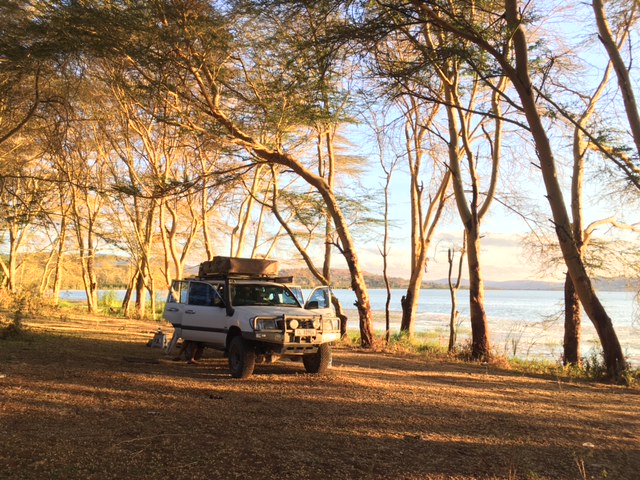
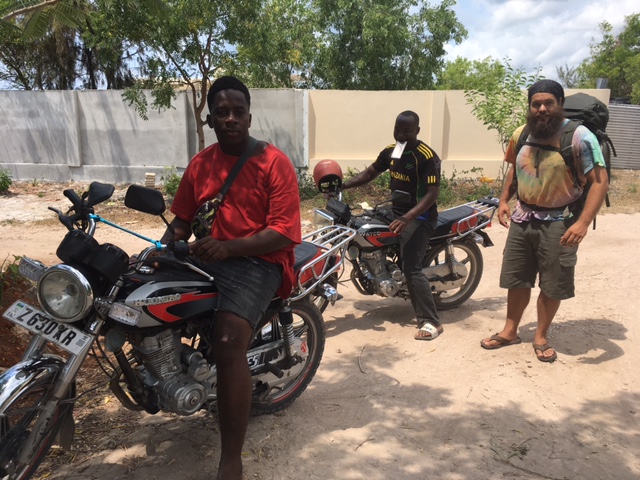
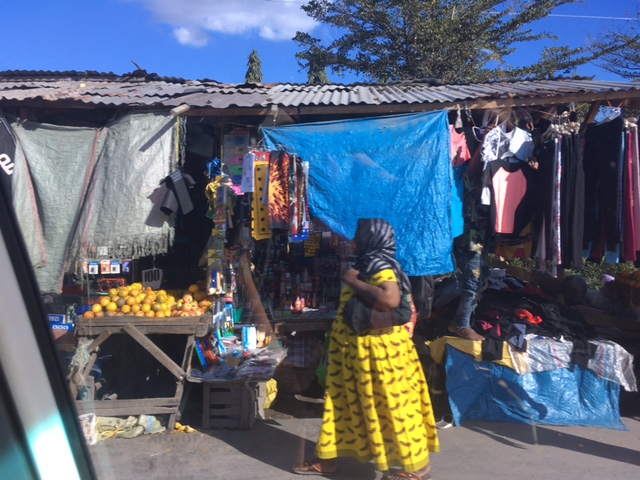
Below some pics from this week:

04 October 2021

Change of plans, no Kenya

Ever since covid-19 we've been mindful that we might get stuck at a border post or have to change our plans on the fly. So this week, when Kenya turned us away, we weren't overly surprised. This was not because of covid, though, but because we didn't have a carnet de passage customs document and our form C32 wasn't accepted.

When traveling in Africa it helps to have an open itinerary, and an open schedule too. Things take time. A lot of time. Pole-pole. Our parents experienced this well during their visit. When we were trying to get a permit for Serengeti it took many hours standing behind many well worn wooden desks with many weary officials behind them. When we went to pick up the cruiser after its windscreen repair it took more than an hour to get the car. While August was sorting out the admin, going to the bank, waiting for the invoice, etc, my parents and I waited in the small waiting room, warm, tired and travel-weary. But we passed the time by having a really good conversation about the 1980s in South Africa and how going overseas with their dubious SA passport opened their eyes to how the rest of the world viewed us then. It was a more turbulent time than we can ever imagine.

Anyway. Everything from buying a sim card to entering a national park takes heaps of time and patience. It's a great (and humbling) antidote to the instant culture back home, where we have anything we want at our fingertips, and people to serve us when we please. Do we ever consider what a sim card actually entails, the IT back-end, the satellite and network infrustructure needed, the micro chip and plastic manufacturing plant where it came from? No. Maybe we'll go crazy if we had to always mind the procress and life cycle of everything we consume. People here, I think, are better at it. And they're not crazy, they're just realistic.

Anyway. Instead of circumventing Victoria Lake like we initially planned, we drove back inland about 1000km and entered Ug from below. The border corssing between Tanzania and Uganda was surprisingly stress free and quick, and we exited the building just in time for a mighty thunder storm and cloud burst to chase us back into the cruiser.  

Both of us have been in Uganda before, but doing it 'self drive' entails different challenges, charms and perspectives. We plan to spend the next two or three weeks retracing some of our 2013 steps as well as embarking on some new adventures.

It promises to be a challenging leg of the trip, with high humidity, more rain and muddy terrain, more road blocks and more mosquitoes. We're hoping that a good dose of travel stamina (and prayers) will sustain us, and that the feeling of being-alive-and-learning-so-much will make up for whatever comes next. One of our favourite travel quotes and personal maxims for overlanding is this one by GK Chesterton: "The traveler sees what he sees, the tourist sees what he has come to see". 

So onwards we go!


30 September 2021

Corrected blog sorry: Mountain meanders and finally greeting Tanzania

> One of our highlights of Tanzania has been the Usambara mountains in the North East corner of the country. Unlike the Serengeti plains and the hills around Kilimanjaro, this area is steeply mountainous and lush. Forestry is the main industry here and I am typing this blog from our camp site at 'the old German mill', a few hours out on the dirt roads of Magamba Nature Reserve. This beautiful camp in the forest features a jumble of rusted machinery, precarious floor planks, and deserted logs with ferns and flowers reaching over them towards the sun. Like most of our camps in the past months, we camped completely alone.
>
> It is good to be back in our cruiser home after our second absence while in Zanzibar (taking the parents). Although it is possible to take a vehicle over on the ferry, a lot of paperwork and admin costs are involved. And once across, the narrowly dangerous alley ways of Stone Town awaits the poor driver. So most overlanders opt to pack a rucksack and do public transport while on the island. Zanzibar is bigger than one imagines, and the touristy parts are only a small percentation of its make-up. One can drive for many hours across the island, watching rice plantations flit by, or bicicles chugging yellow jerry cans or large green bundles of cattle feed.
>
> Having spent more time in Tanzania than we anticipated, we plan to zoom through Kenya, Uganda and Rwanda before we turn our compass back south. So far our travel has been without major set backs, and we are really thankful for that. In Dar es Salaam we managed however, in a matter of two days, to shatter our windscreen and to get a pretty large traffic fine. So we feel a bit broke at the moment. But, on the up side, we havent had any enjine problems or other serious incidents.

> Our original route plan, Cape to Gabon, has died a slow death due to covid and other restrictions, so we now need a better name for our expedition. One that came to mind was Cape to Vic Lake, since that is probably where we'll start heading back home, or Cape to Kenya. But, as I reflected on our slow traverse, I wondered whether listing a start point and a finish point doesn't make the journey seem too straightforward. We've been meandering across each country, following our feet, so to speak, towards whatever comes next. Getting to vic Lake takes two weeks. Getting to know yourself takes a bit longer. I like the Swahili term 'pole-pole' which means something like slowly-slowly, or 'have patience my friend'.
>
> We are entering the short rainy season now, so for the month of October we should get a bit more tropical rain and heat. We've heard rumours about Malawi and Mozambique sizzling at 40 degrees already, so we're really grateful for the cruiser's airconditioner and fridge to keep milk, cheese and drinks refrigerated. Today we plan to do our next pcr test and then face the border post to Kenya. Keep thumbs for easy paperwork and a swift entry!

29 September 2021

Mountain meanders and finally greeting Tanzania

One of our highlights of Tanzania has been the Usambara mountains in the North East corner of the country. Unlike the Serengeti plains and the hills around Kilimanjaro, this area is steeply mountainous and lush. Forestry is the main industry here and I am typing this blog from our camp site at 'the old German mill', a few hours out on the dirt roads of Magamba Nature Reserve. This beautiful camp in the forest features a jumble of rusted machinery, precarious floor planks, and deserted logs with ferns and flowers reaching over them towards the sun. Like most of our camps in the past months, we camped completely alone.

17 September 2021

Serengeti roundabout

It was a jam-packed itinerary with the parents. They flew with a single propeller airplane to Arusha, which is the closest airport if you want to see the serengeti. We met them with the cruiser there.

Day 1 was spent recovering from their 2:30 am landing and sorting out the luggage.

Day 2 saw us driving about 3 hours to a guest house near Usa river, where UK-born Paul and Erica Shaw runs a 4x4 rental company and safari planning agency. Their hospitality was great (they barely had guests for 2 years!) and we chatted late into the night about life in Tanzania and options for our short trip. We eventually decided to leave the cruiser with them and rent one of their kitted Landrovers (the same one Kingsley Holgate had a few months prior). The park fees structure is somewhat greek to me, but a local number plate is a lot cheaper per day ($18 vs $150).

Day 3 was spent driving the 6 hours to Migombani, a camp site outside Lake Manyara. Halfway there.

Day 4 we drove another 6 hours to central Serengeti, where we camped in one of the public (aka budget) camp sites. Signing in to the park took a good 2 hours, since they have a complex computerised registration system. Despite covid the camp site was relatively full. That night we heard lion, jackal and hyena.

Day 5-7 we were spoilt with a private tented camp run by ex-South African Sally. We had two friendly Swahili chefs (Alex and Francis) cooking for us, there was hot water for showering and the fantastic Zeb took us out for two game drives. Zeb has been working the serengeti migration circuit for 5 years and has a wealth of knowledge and experience (and witty stories) to share.

Day 5 we experienced a proper Tanzanian downpour of rain, and the drive back in the open game vehicle was pretty miserable. We also encountered the horrendous condition of the park roads - eish. The landrover's hard suspension soon had me missing our Cruiser very much!

Day 6 we were absolutely spoilt to see a large group of wildebeest crossing the Mara river. Some people wait for days and see nothing, and if you're in the wrong place, you'll easily miss a potential crossing. There are no guarantees in nature, as Zeb reminds us. We also saw a cheetah, leopard and lioness with cubs to round off a very special day.

Day 7 we greeted Zeb and the others and drove back to the Southern exit of the park. That night we camped at the lush public campsite on the rim of the NgoroNgoro crater, a freezing night at 2200m elevation, a total contrast with the yellow plains of the days before.

On Day 8 we had a few hours to explore the inside of the caldera with its stunning vistas and wildlife scenes. We saw two male simbas, large herds of buffalo and zebra and the quietness of the place felt like a world unspoilt by human civilisation - really special. From there we drove to Paul and Erica, about 6 hours back, who suggested that we do the covid test in Arusha the following morning.

Day 9-11. We had a bit longer trek back to get the parents on their flight home, with the drive to Dar taking a lot of time with all the 50km/h zones. We did have two great stop overs before their flight out, one in the Usambara mountains and one at Kimbiji on the ocean with amazing seafood.

04 September 2021

Mr Simba and the folded swans


We spent day 100 of our trip without ceremony. The morning we set off from the 'old farm house', run by fourth generation british-tanzanian expats, and spent the following night at 'Mantis lodge', a moslem father and son establishment for local conferences and travelers. At Mantis lodge we set up our rooftent on a bare clearing next to a water tank on cement stand, folded out our little chairs and opened a soda each. Nothing about the camp site was romantic. I surveyed the bare compound, and the men playing chinese checkers a few meters off. We were both weary from the day's drive, felt a bit out of place, and crawled into the tent early. Latenight someone idled their car loudly right outside our tent for what felt like hours. We eventually ask them to please either turn off the ignition or move the car. They left. 

The next morning, like almost every morning, I try and remember where I am. It's a uncanny and almost funny feeling. I know that I am in our tent and that we're on our trip, but where are we actually? What camp site, what village, what country? The little canvas walls have a way of blocking out the world. But then as I wake up I start to recollect the events of the day before and place them in order and context again.

There hasn't been a single day when I could accurately predict what our lodgings for the night would look like. Of course one sees a photo and a name on your phone, or read what amenities are available in the guide book. You see the icons reading 'potable water, pet friendly, hot shower, electricity'. Later you get a sense what "basic facilities" mean in the guide book, or what reviewers mean with "great hosts" or "ablutions can be better". But each new camp or lodge has been totally different from the mental picture I formed on the way there. For instance:

At wannabees lodge (day 95), the bed is made sideways. At Pugo forest reserve (day 96) no-one is allowed to camp without an overweight ranger. At Upepo lodge (106) a paper sign reads "please don't rest or walk under the palm trees". Utengulu coffee lodge has the most amazing cuppuccinos and also a deserted squash court. At Mutinondo you can take a soda from the honesty bar and do a 10 hills hiking challenge. The receptionist/owner co-authored 'trees and plants of Zambia'. Lake Tanganyika resort (day 94) smells really, really nice. At Kapisha Hot Springs (day 90-92) there is a upstairs tv room with cartoons to keep children out of their parents's hair. In more than one place in Zanzibar the towels were folded like swans. At Deo Volente guesthouse (day 82) the braaiplace has 'lekker man lekker' written on it, and the owner's son brought us shots as a welcoming drink.

The eccentricities of budget accommodation are endless. But everywhere we are met with smiles and 'karibu sana' (you are very welcome). In Zanzibar we were often greeted with "Mr Simba - welcome!" Or even "Mr Jesus, welcome to Zanzibar!", owing to August's impressive beard and mane of hair. 

We are currently heading to Arusha where we will meet up with Aug's parents and spend the next 10 days on a safari with them (safari is swahili for journey) to serengeti and surrounds. I haven't been able to spot kilimanjaro due to the clouds, but my first peek at Mount Meru (the second highest in Tanzania) impressed me a lot.

There are so many other things to tell, stories and impressions, deep things to ponder and funny things to laugh at. Oh, and we also had our first rain of our whole trip! And its starting to become really warm and humid now, enough to get on our nerves sometimes. But we're still healthy and happy and learning so much. Asante sana! Safari Njema!


24 August 2021

First impression of Tanzania

From Bangwuelu swamps (previous blog) we have been traveling via a few stunning waterfalls in northern Zambia out into Tanzania. It is my first time, but August's second.

It doesn't seem possible that a national border could have such an acute influence on the culture. But so it seemed to me, for when we crossed from Zambia into Tanzania, everything changed abruptly. Perhaps I had just grown used to Zambia. The rush of nostalgia that hit me there is hard to discribe -  I had only been in East Africa once, Uganda, and that for four months in 2013. But there was something familiar about Tanzania now that felt different than anything else on the trip before. I think for both of us the crossing into Tanzania seem significant. Some of August's Swahili came back to him (mambo, njuri, keshwahiri, asante), from when he travelled here with his bicycle in 2012. His fondness for the landscape and people is evident in his eyes. Driving from the border post into the rural landscape, he told me for the first time of the police officer in Tanzania who bought him a cold drink. "Yes, he asked about my trip, told me to follow him (which I did nervously) and then he bought me a coke. The Tanzanians are super friendly." That incident, I thought afterwards, perhaps so singular among other stories about officials in Africa, will remind me of the exceptions that always break the rule.

The landscape has also changed. We noticed a slight change in gradient and the hint of rolling hills in the north of Zambia, but it was nothing like after the border, when suddenly we were surrounded by mountains, high forested hills, houses and plantations, in my mind heaving up-and-down like on an undulating ocean. Suddenly there were layers in the landscape (to my painter's eye), not just the immediate 10m radius in so much of the South. Is this the start of the great rift valley? I asked, awed. Even the plants, as if inspired by the lively red soil beneath it, burst with more energy.

While waiting in the car queue for fuel after the border, the smell of rice mix with that of exhaust fumes, grinded metal, tar and of humanity everywhere. Rice! Spiced rich. And just as I realised it's lunch time, the call of the Imam begin sounding for prayers. And I see long white tunics (for moslem men) at a street vendor, and women wearing full body covering (burka or chador). There are bright red tuk-tuks burring past us, and trucks and busses, and the streets are more frantic than any we've seen on the trip so far. It must be what India must feel like. A woman with a plastic basin full of grapes walked past, the first grapes I had seen in months, and then another with oranges. There are kids with buckets of sugar cane on their heads, and parked motorcycles glistening in the sunshine. A man with 10 trays of 24 eggs each on his head hurry past the car. Schoolgirls wear ankle long dark blue skirts. The sensory overload, like in my Kampala days, is overwhelming.

I try to hide in the car from it all, but later join August at a mpesa booth (mobile money transfer point), tucked between 5 other small vendors and pavement stalls. We have to pay there for the comesa insurance a few offices down the road. Behind the sooty glass is a girl, about my height, wearing hijab, busy handling a card machine in one hand and dealing out cash with the other. There seems to be four transactions happening at once, dark hands reaching into the glass from behind us, some changing dollars for shillings, others making card payments and some counting greasy bank notes. I am reminded briefly of childhood church basaar paper money - the shillings feel so numerous (R100 equals TSH15,000). The girl catches my eye and steals me a small, but earnest smile. I feel drawn into her life, exchanging places for a brief moment and wondering at her. Swamped by the grasping hands of the shopkeepers and agents, hustlers and endless transactions, while young as she it, she seems to keep it all together, calmly. How strange life is - I tell myself. Her normal life, her reality, so extravagant in my eyes.

We have a few bucket list items for Tanzania, the obvious being serengeti and zanzibar, but the hours and hours spent in 'getting there' (the daily grind as August calls it) is just as much part of the trip. The slowness of the journey is something we both value. It is full moon now (our tent has mesh in the roof) and last night I asked whether we really were just at Vic falls the previous full moon - it feels like a lifetime ago. We don't want this kind of slow but rich experience to end. If we find out how, we'll let you know. For now we'll just savour the beans-and-rice and the brightness of fanta and plastic chairs and tables.


Still coming home

Coming back seems to take a while emotionally. We miss the slowness and the simplicity of things - not rushing off to finish self-inflicted ...